Tuesday, June 7, 2016

Pakistan perceived encirclement

Pakistan perceived encirclement
Masood Khan
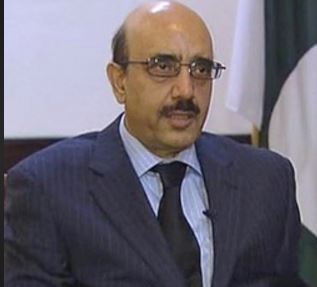

THESE days, Pakistani media and analysts are paranoid about Pakistan’s encirclement and see this as a failure of Pakistan’s foreign policy. A series of events have reinforced this anxiety. Last month was particularly eventful in fuelling such fears. India, Iran and Afghanistan singed a trilateral agreement to link India’s west coast to Chabahar to Afghanistan. India announced a sizable investment, some US $ 500 million, for the development and operation of two terminals and five berths of the Chabahar port for 10 years. Indian journalists have exulted that by signing the deal it has bypassed Pakistan and reduced the value of the Gwadar port and the China-Pakistan Economic Corridor (CPEC). The US Congress scuttled an F-16 jet fighter aircraft sale to Pakistan and India takes credit for blocking the deal. 

The US launched a drone strike that killed Mullah Akhtar Mansour, the Taliban leader on Pakistani soil and thus impaired prospects for a dialogue process for peace and reconciliation in Afghanistan. That is not all. India has been successfully cultivating closer relations with Pakistan’s traditional allies – Saudi Arabia, UAE and others – making fresh inroads presumably at the expense of Pakistan’s interests. Prime Minister Modi, in his meetings with foreign leaders, has been frequently denigrating Pakistan.

We need to understand if these events signal a deliberate encirclement of Pakistan. They do; and they do not. In all these events, India is a common factor; and India has openly vowed to isolate Pakistan. Gone are the days when India used to pretend that it as a major power and would be dismissive and nonchalant towards Pakistan. It is part of its policy now to demonize Pakistan to squeeze whatever diplomatic space Pakistan has. Sandwiched between India and the US, Afghan leadership, despite its periodic attempts to reach out to Pakistan, is getting sucked, and quite willingly, into an orbit that would make it more distrustful of Pakistan. In many instances, Afghan leadership itself may be stoking American concerns about Pakistan. Iran does not gain much from isolating Pakistan.

Our babes-in-the-woods, naive reactions to these developments, however, do not speak to the complex situations in our neighbourhood. These are protests highlighting our inefficacy and national depression, without eliciting clear thinking and remedial measures. We tend to see the world through a moral compass that would force other nations, even hostile to Pakistan, to align their plans and priorities to Pakistan’s strategic worldview. In the real world, India, Iran and Afghanistan would pursue their interests, without using Pakistani compass. 

The US would make its own determination about drone attacks in the light of Pakistan’s likely befuddled responses and the peace and reconciliation process after Afghan Taliban’s refusal to join talks.

World politics is not static; it is dynamic in which both the expected and the unexpected would continue to happen. We have our own limitations. At the moment, in the absence of dialogue and trust, we cannot allow unhindered access to India, through our territory, to Afghanistan and Central Asia. For that conditions have to be ripe. We would continue to support the Afghan peace process but we cannot start open military operations against Afghan Taliban.

 And, while we are keen to start a new phase of relations with Iran, practical and visible steps need to be taken by Tehran to dismantle Indian spy networks operating out of Iranian soil. The Iranian government has accepted the legitimacy of this demand. If all these policy choices of ours are sound, we should not be merely rattled by the initiatives taken by India, Iran and Afghanistan, but should have braced for them.

Our stance should be proactive rather than reactive. After finalizing the deal on Chabahar, India is swiftly moving to opening a dialogue with Bangladesh for the development of its Pair port. President Xi Jinping and President Hassan Rouhani have identified Iranian ports as an area for cooperation between China and Iran. A Chinese consortium has shown interest in participating in the development of the Chabahar port and building an industrial zone there. The world is multi-angular, not unilinear.

Pakistan and Iran have credulously claimed that Gwadar and Chabahar are not rivals, but sister, complementary ports. Pakistan should exude enough confidence to translate this motto into reality. In this context, it is important that Pakistan does not miss its timelines for Gwardar and CPEC because of political instability, indecision, for lack of consensus. Pakistan should also try to make plans to develop other ports – Pasni, Ormara, Gadani – along Pakistan’s pristine coastline to develop its maritime economy on a large scale.

Despite the strains in its relations with Delhi and Kabul, Pakistan has a stable, expanding relationship with China. We should continue to consolidate our historic ties with China and connect CPEC more intimately with One Belt One Road. Pakistan’s border with Iran is peaceful, by and large, and we have new, fresh opportunities in the Gulf, Africa and South East Asia. Pakistan should not lament and grieve about the developments over which it has little control, for instance in regard to the Indo-Iran-Afghan deal, and focus on what it is doing well and what it can do. Our neighbors will do what they have to do and we should work to enhance our political and economic space in the region and beyond.

In addition to the CPEC, we should open up our Western corridor through Iran, which would give us access to Central Asia, Turkey and Europe. This is not a pipe dream, but a doable agenda. Similarly, we should create new economic outposts in Africa, the most neglected continent in our diplomacy. Africa is a rising continent, it is apolitical vis a vis Pakistan, and because of Pakistan’s participation in peacekeeping missions, Pakistan has a reservoir of goodwill in West, Central, and East Africa. Pakistan needs to build on this goodwill to create new professional and entrepreneurial platforms with African countries.

We should walk the tightrope of the Middle East skillfully. The goodwill for Pakistan is still there, recent misunderstandings notwithstanding. In the coming days, the Middle East, and especially the Gulf States, would become more dependent on Pakistan for jobs, businesses and joint ventures. We should steer clear of ideological controversies and focus single-mindedly on win-win economic cooperation with the Middle Eastern countries.

Despite the recent turbulence in our relations with the US, we should lower the rhetoric and manage the cordiality and functionality of the relationship at a realistic level. In this context, Pakistan’s red lines, for instance on drones, should no more remain blurry as in the past. We should also try to convince American leadership that their policy of partisan stances favoring Delhi and Kabul are not a good recipe for stability in South Asia. At the same time, we should work to restore and renew faith in the Pakistan-US relationship so that we can pursue our Knowledge Corridor with the US and expand our economic, scientific and technological partnerships with the United States’ public and private sectors.

Finally, our new beginnings with Russia and Europe are promising. Opening with Russia, in particular, needs careful nurturing. Again, the objective here should be to enlist Russian support to bolster our security capabilities and strengthen our economic and manufacturing muscles.

There may be willful or inadvertent attempts to encircle Pakistan. These are abiding challenges to our statehood in a strategically difficult and complex neighborhood. We cannot relocate Pakistan to avert the challenges we face. But we should persist in developing the necessary ingenuity to break out of the circles around us and make maximum use of the abundant opportunities that we have inside and outside Pakistan to build our own bridges, conduits and corridors across the region. As long as we do not neglect the primacy of our national security and economic development, we will not fail in our endeavors.

—The writer is Director General Institute of Foreign Relations Islamabad and a former Ambassador. He also worked in Pakistan Embassy in Washington from 1997 to 2002

Eighty percent of children are in danger of online sexual abuse

Eighty per cent of 18-year-olds believe young people are in danger of online sexual abuse – UNICEF/Ipsos global poll
Al-Bab Report


NEW YORK, 7 June 2016 – Eight out of ten 18-year-olds believe young people are in danger ofbeing sexually abused or taken advantage of online, and more than five out of 10 think friends participate in risky behaviours while using the internet, a new UNICEF study shows.

Perils and Possibilities: Growing up online is based on an international opinion poll of more than 10,000 18-year-olds from 25 countries, revealing young people’s perspectives on the risks they face growing up in an increasingly connected world.

“The internet and mobile phones have revolutionized young people’s access to information, but the poll findings show just how real the risk of online abuse is for girls and boys,” said UNICEF’s Associate Director of Child Protection, Cornelius Williams. “Globally, one in three internet users is a child. Today’s findings provide important insights from young people themselves. UNICEF aims to amplify adolescents’ voices to help address online violence, exploitation and abuse, and make sure that children can take full advantage of the benefits the internet and mobile phones offer.”

The new report finds that adolescents appear confident with their own ability to stay safe, with nearly 90 per cent of interviewees believing they can avoid online dangers. Approximately six out of 10 said meeting new people online is either somewhat or very important to them, but only 36 per cent strongly believe they can tell when people are lying about who they are online.

More than two-thirds of girls, 67 per cent strongly agree they would be worried if they received sexual comments or requests over the internet, this compares to 47 per cent of boys. When online threats do occur, more adolescents turn to friends than parents or teachers, but less than half strongly agree they know how to help a friend facing an online risk.

Other findings from Perils and Possibilities: Growing up online include;
·       Two-thirds of 18-year-olds in Sub-Saharan Africa and Latin America and the Caribbean believe children and adolescents are in danger of being sexually abused or taken advantage of online. This compares to 33 per cent polled in the Middle East and North Africa.
·       Two-thirds of interviewees in Sub-Saharan Africa and Latin America and the Caribbean either believe strongly, or somewhat, that friends put themselves at risk online, compared to 33 per cent in the United States and United Kingdom.
·       Eighteen-year-olds in the United States and United Kingdom are most confident they can avoid online dangers with 94 per cent strongly or somewhat agreeing they can protect themselves on social media. In the Middle East and North Africa only 41 per cent strongly agree and an additional 37 per cent agree somewhat.
·       Adolescents in Sub-Saharan Africa appear to value meeting new people online most, with 79 per cent saying it is either very or somewhat important. In the United States and United Kingdom 63 per cent say it is not very, or not at all important to meet new people online. 
·       In Central European countries, 63 per cent of interviewees strongly agree they would tell a friend if they felt threatened online, compared to 46 per cent who would tell their parent. Only 9 per cent would tell a teacher.

To engage children and adolescents in ending violence online, UNICEF is launching #ReplyforAll, which is part of its global End Violence Against Children initiative. #ReplyforAll puts adolescents’ front and centre as messengers and advocates to keep themselves safe online. Children and adolescents will be asked to give their advice on the best ways to respond to online violence or risks and to raise awareness among friends through social media. This work has been supported by the WePROTECT Global Alliance, which is dedicated to ending the sexual exploitation of children online through national and global action. 

UNICEF, together with the WePROTECT Global Alliance, is calling on national governments to establish coordinated responses between criminal justice systems including law enforcement, and child welfare, education, health and the Information Communication Technology (ICT) sectors, as well as civil society, to better protect children from online sexual abuse and exploitation.

“When young people, governments, families, the ICT sector and communities work together, we are more likely to find the best ways to respond to online sexual abuse and exploitation, and send a strong message that confronting and ending violence against children online – indeed anywhere – is all of our business,” said Williams.  

Obama on Ramadan

Statement by President Barack Obama on the Occasion of Ramadan


Al-Bab Report


Islamabad, June 7, 2016: As another new moon heralds the start of the holy month of Ramadan, Michelle and I extend our best wishes to Muslims across the United States and around the world.

For many, this month is an opportunity to focus on reflection and spiritual growth, forgiveness, patience and resilience, compassion for those less fortunate, and unity across communities. Each lesson is profound on its own, and taken together forms a harmonious whole. It’s also a time of year that brings some of the best dishes to the table across the world as families and neighbors gather for iftar.

Here in the United States, we are blessed with Muslim communities as diverse as our nation itself. There are those whose heritage can be traced back to the very beginning of our nation, as well as those who have only just arrived. Doctors, lawyers, artists, teachers, scientists, community organizers, public servants, and military members, each night will all break their fasts together in cities across America.

As Muslim Americans celebrate the holy month, I am reminded that we are one American family.  I stand firmly with Muslim American communities in rejection of the voices that seek to divide us or limit our religious freedoms or civil rights. I stand committed to safeguarding the civil rights of all Americans no matter their religion or appearance. I stand in celebration of our common humanity and dedication to peace and justice for all.

And in this month of reflection, we cannot forget the millions of lives that have been displaced by conflict and struggle, across the world and in our own backyards. Far too many Muslims may not be able to observe Ramadan from the comfort of their own homes this year or afford to celebrate Eid with their children. We must continue working together to alleviate the suffering of these individuals. This sacred time reminds us of our common obligations to uphold the dignity of every human being. We will continue to welcome immigrants and refugees into our nation, including those who are Muslim.

As I have done throughout my presidency, I look forward to opening the doors of the White House to Muslim Americans during this special occasion – this year for an Eid celebration marking the end of Ramadan. I can think of no better way to mark my Administration’s last celebration of Ramadan as President than to honor the contributions of Muslims in America and across the world for Eid. Ramadan Kareem.

Land and Forest Governance in Swat

Land and Forest Governance in Swat
Transition from Tribal System to State to Pakistan
Sultan-i-Rome

The book details how forests have been managed in the Swat State areas and Kalam from the 16th century to 2014. It also discusses issues of land tenure and ownership system in the region, without which forestry issues and the accompanying complexities cannot be fully understood. The political and administrative backdrop to all these issues have also been explored in detail.

AUTHOR DESCRIPTION

Born in the Hazara village in Swat, Sultan-i-Rome received his primary and secondary education at government schools in Hazara and Kabal. He completed his bachelor’s from Government Jahanzeb College, Swat, master’s in General History from the University of Karachi, and PhD from the University of Peshawar. He is presently Associate Professor of History, and Department Chairman at Government Jahanzeb College, Swat.
Sultan-i-Rome is a life member of the Pakistan Historical Society and a sitting member of its Executive Committee. He is also a life member of the Council of Social Sciences Pakistan, and the Pukhtu Adabi Board. His fields of interest include the political, social, and economic history of the region, its culture, and its natural resources.
Sultan-i-Rome has published, to date, more than fifty research articles in academic journals, books, anthologies, and proceedings; and two working papers. He has participated and presented papers in numerous national and international seminars, conferences, and workshops. In addition to the present book, he has to his credit Swat State (1915–1969)—From Genesis to Merger: An Analysis of Political, Administrative, Socio-Political, and Economic Developments (OUP 2008) [also translated and published in Urdu], The North-West Frontier (Khyber Pakhtunkhwa): Essays on History (OUP 2013), and a book of Pashto proverbsMataluna (2013), with more projects in the pipeline.

Monday, June 6, 2016

Washington’s freshness

Washington’s freshness
Dr. Jassim Taqui


According to the Finance Minister Ishaq Dar, the United States has pledged to release $1.6 billion from the Coalition Support Fund (CSF). Based on the US promise, Dar included Rs. 170 billion in the 2016-2017 budget under non-tax revenue. In fact  $1.6 billion is supposed to cover the expenses of deploying about 140,000 troops along Pak-Afghanistan border. But Dar has another ideas.

Dar also disclosed that the government is negotiating with Washington a new " permanent arrangement” of CSF. However, he refused to give any details about the new arrangement. It is, however, clear that the government is converting anti-terrorism reimbursements for the cost of war against terrorism into the budget instead of passing the money to the army.

Ostensibly, Washington is desperate to support the PML-N even as Panama Leaks proved its massive corruption.

Such policy has never been followed by erstwhile administrations. The previous  US administrations never tolerated corruption.  Ambassador of the US to Pakistan  Thomas Simons(1995-1998)  had to visit the office of the former prime minister Benazir Bhutto to complain from the massive corruption of her spouse Asif Ali Zardari.

 Simons was so harsh with Bhutto that she snubbed him and asked her advisors to send a letter of protest to the then President Jimmy Carter complaining that the American Ambassador had no right “to treat Pakistan’s prime minister that way.” Carter had to intervene and ask Simons to apologize to the prime minister, pre-empting a possible move to declare Simons persona non-grata.

Simons was lobbying for Unocal gas pipeline. He made arrangements with Taliban to protect the pipeline but Zardari wouldn’t agree without having his “ 10 percent” share of the project. It turned to be that Benazir Bhutto was the real brain behind the pipeline while Zardari was the front man.


Now, however, the US administration is not only ready to work with corrupt regimes but also to liberally  finance them . Hence, one can say, change has come. Values have  disappeared and “freshness” has become the order of the day. 

How Special Forces Snipers Communicate | Sniper Spotter Dialogue | Tacti...

4th Annual U.S.-Pakistan Business Opportunities Conference

4th Annual U.S.-Pakistan Business Opportunities Conference
Al-Bab Report


The Government of the United States and the Government of Pakistan convened the fourth annual U.S.-Pakistan Business Opportunities Conference on June 2-3 in New York City. Hundreds of U.S. and Pakistani business leaders joined government officials to explore commercial opportunities and expand business-to-business linkages. The 2016 conference, the first to be held in the United States, built upon President Barack Obama’s and Prime Minister Nawaz Sharif’s October 2015 commitment to expand bilateral trade and investment.

Pakistani Federal Minister for Commerce Khurram Dastgir Khan and U.S. Deputy Secretary of Commerce Bruce Andrews led the two countries’ delegations. The senior officials noted their optimism for the U.S.-Pakistan partnership, reiterating that economic cooperation and strong commercial ties are essential. Featured as the conference’s corporate keynote speaker, General Electric Vice Chairman John Rice addressed the business and investment climate in Pakistan.

Throughout the conference, government and private sector representatives discussed trade and investment opportunities with a particular focus on fashion apparel, health care, information communication technology, agriculture, and women’s economic empowerment. Panelists shared their perspectives on trade and investment opportunities, doing better business in Pakistan through increased familiarity with regulations, and ways to increase gender diversity in employment.

U.S. Ambassador-at-Large for Global Women’s Issues Cathy Russell and Pakistani Ministry of Commerce Additional Secretary Robina Ather announced a joint action plan which outlines concrete steps to advance women’s economic participation and entrepreneurship. Under the plan, Pakistan will organize its first Women in the Economy Forum and its first nationwide “Take Your Daughter to Work Day” to raise awareness of and increase career opportunities for women.

Other conference speakers included Fred Hochberg, Chairman of the Export-Import Bank of the United States; Jalil Jilani, Pakistani Ambassador to the United States; Richard Olson, U.S. Special Representative for Afghanistan and Pakistan; Donald “Larry” Sampler, Assistant to the Administrator for the U.S. Agency for International Development (USAID) Office of Afghanistan and Pakistan Affairs; Naheed Memon, Sindh Board of Investment Chairperson; and Ziad Haider, U.S. State Department’s Special Representative for Commercial and Business Affairs.

A networking reception hosted by the U.S.-Pakistan Business Council on June 2 highlighted the April 2016 launch of the Pakistan Private Investment Initiative and facilitated additional business linkages among conference participants. The Pakistan Private Investment Initiative is a partnership between USAID and three private equity fund managers to invest over $150 million in capital to help Pakistani businesses grow and create jobs.

Sunday, June 5, 2016

Natalia Gherman might be the first woman UN Secretary General

Natalia Gherman might be the first woman UN Secretary General

Dr. Jassim Taqui


Ms Natalia Gherman is rising everyday in her quest to be elected UN Secretary General. Volunteers all over the world are campaigning for her. she has a brilliant career and a strong personality. Being a woman and belonging to Easter Europe makes her a formidable candidate. He illustrious diplomatic experience adds to her qualification.

Ms. Natalia Gherman is a former Deputy Prime-minister and Minister of Foreign Affairs and European Integration of the Republic of Moldova. She is a career diplomat holding the diplomatic rank of Ambassador. In June-July 2015 she was Acting Prime-minister of the Republic of Moldova.

Ms. Gherman began her long career in service to her country as the Second Secretary for the Department of International Organizations of the Ministry of Foreign Affairs of the Republic of Moldova from 1991-2; then First Secretary for the Department of European Organizations from 1992-4. From 1994-7, Ms Gherman served as Counselor and Deputy Permanent Representative of the Republic of Moldova to the OSCE and the UN Agencies in Vienna; from 1997-2001, becoming the Deputy Head of the Department of European Security and Political-Military Affairs of the Ministry of Foreign Affairs of the Republic of Moldova. Ms. Gherman served as Minister-Counselor of the Embassy of the Republic of Moldova in Brussels as well as Deputy Head of the Mission of Moldova to NATO from 2001-2. This led to Ambassadorships, first as Ambassador Extraordinary and Plenipotentiary of the Republic of Moldova to the Republic of Austria as well as Permanent Representative to the UN Agencies in Vienna and to the OSCE. Representing her country to the OSCE in Vienna, Ms. Gherman has been a prominent contributor to the efforts of the Organization on identifying solutions to the unresolved conflicts in the OSCE area, at the same time mobilizing the potential of the OSCE community towards the resolution of the Transnistrian conflict in the Republic of Moldova in accordance with the International Law. 

From 2006-9, Ms. Gherman served as first resident Ambassador Extraordinary and Plenipotentiary to the Kingdom of Sweden, Kingdom of Norway and the Republic of Finland. For her merits in promoting relations between Sweden and Moldova, His Majesty the King of Sweden awarded Ms. Gherman the Royal Order of the Polar Star of the Kingdom of Sweden in the rank of Commander First Class.

As Deputy Minister of Foreign Affairs and European Integration of the Republic of Moldova in 2009-13, Ms. Natalia Gherman was the Chief Negotiator on behalf of the Republic of Moldova for the Association Agreement, the Deep and Comprehensive Free Trade Area and the visa liberalization dialogue with the European Union. 

For the successful negotiations of these crucial Agreements that paved the way for Moldova's European Integration, in 2014 Ms. Gherman was awarded the highest national distinction - the Order of the Republic of Moldova.

Saturday, June 4, 2016

Improving Pak-Indo relations

Improving Pak-Indo relations
Dr. Jassim Taqui

 “The supreme art of war is to subdue the enemy without fighting.”- Sun Tzu, The Art of War


Many people miss the fact that the mission of envoys accredited to other countries is to improve bilateral relations. Diplomats are the hope. With their diplomatic skills and experience, they are the answer to defusing tension and deterring  war. Eruption of war should be considered by all standards a primitive way of resolving differences.
Almost all think tanks predict that the first nuclear war would start from the Indian subcontinent and it would be between India and Pakistan. This would be a disaster not only for regional peace but also for global security.

Unfortunately, the UN Security Council remains indifferent to this danger. No action has been taken to help diffuse tension between the two nuclear states.

However, one could see some improvement in the bilateral relations. First, came the statement of the head of India’s National Investigation Agency (NIA) Sharad Kumar in which he said that there was no evidence of Pakistan government or agencies’ involvement in the attack on Indian Air Force in Pathankot. Subsequently, the Indian High Commissioner in Pakistan Gautam Bambawale stated that he was expecting a breakthrough in resuming the Indo-Pak dialogue under which the two countries could hold talks on all issues, including Kashmir.


By far, these are the best development in the strained bilateral relations. The two governments should stop using media to spread hatred and confusion between the two countries. Let the diplomats work out confidence building measures and a mechanism to resolve peacefully the outstanding issues that hamper the normalization of the bilateral relations. 

US risks a nuclear war with China

The war of the roses revisited
Dr. Jassim Taqui


Having  turned the entire Middle East into chaos and anarchy, the Obama administration is now confronting China.  In a surprise move, the US Secretary of Defence Ashton Carter warned China of “actions” if it continued construction on a South China islet on the plea that  it was claimed by the Philippines.  He went on to warn China of building a “ Great Wall of isolation.”

This shows that the Obama administration is building  a case to use military force and impose sanctions on China.

Ostensibly, Carter is building a case against a rising China in a bid to engage Beijing in a regional war that would hinder the economic progress of China and spread doom in the region.

It is a case study of how a nuclear superpower can risk a nuclear war by confronting another nuclear superpower. Seemingly, Carter has lost control of himself. No sane person would risk a nuclear war especially when the avenues of dialogue are open and plenty.

All credits to China, which responded calmly to the  American threat . China maintains that it has  indisputable sovereignty over the Nansha Islands and the adjacent waters, which is fully backed by historical and legal evidence. It has never acknowledged the so called “ status-quo” formed by other countries’ illegal occupation of Chinese territory.

One would hope that Carter should stop playing with fire and let China and ASEAN resolve the problem through peaceful means. 

Nawaz Sharif’s black spots

Nawaz Sharif’s black spots
Dr. Jassim Taqui


It was May, 1988 when the former Prime Minister of Pakistan Muhammad Khan Junejo  decided to make Gen. Zia-ul-Haq and all other senior military officers use Suzuki 800cc car in an austerity drive. Zia ul Haq himself introduced the car in a bid to give relief to the middle class. I remember, he fixed the price at Rs. 50000 only.

Gen. Zia ul Haq was offended. He dismissed the elected prime minister  Junejo, the pride of Pakistan. He also  used all the machineries of the state to hijack his party. Nawaz Sharif was the first to support. He even hijacked the entire PML-J party and formed his own pro-Zia faction PML-N.

Another black spot in the life of Nawaz Sharif was his conspiracy against the former Chief Justice of Pakistan Syed Sajjad Ali Shah who served him a contempt of court notice in 1997. Nawaz Sharif  asked his brother Shahbaz Sharif to send him the elite police of Punjab. The police imposed a siege on the Supreme Court in a bid to silence  the incorruptible Chief Justice.

Subsequently, PML-N’s top leaders invaded the Supreme Court of Pakistan in one of the most shameful event in the history of Pakistan.
On December 2, 1997, Shah was dismissed prematurely in a manner that goes at variance with all national and international norms. Shahbaz Sharif was in charge of the operation. I remember that BBC showed live the mob’s  invasion of the Supreme Court of Pakistan. If you see the footage of BBC in the internet, you would find some heavy weight PML-N leaders  leading the mob.

There are other unprintable black spots in the life of Nawaz Sharif. You would not believe yourself  when you hear them.

Thus one would ask the champions of democracy and rule of law: how would you justify supporting such a person? 

U.S. Ambassador Blome’s Meeting with Deputy Prime Minister and Foreign Minister Ishaq Dar

U.S. Ambassador Blome’s Meeting with Deputy Prime Minister and Foreign Minister Ishaq Dar The below is attributable to U.S. Mission Spokes...