Friday, May 27, 2016

Bank-i-moon addresses Doha Forum

Peace is needed
Ban-ki- Moon


I thank the State of Qatar for generously hosting the Doha Forum.
We gather at a time of fragility and vulnerability.

Our world faces multiple armed conflicts, rising extremism and the widening impacts of climate change.

One hundred and thirty million people need life-saving humanitarian assistance.

War and persecution have forced 60 million people from their homes -- the most since the Second World War.

Here in the Middle East and Gulf region, millions of people are suffering the consequences of conflict, terrorism, inequality, regional rivalries and severe deficits in basic freedoms.

The scale of these challenges demands a more concerted global response.

We can draw encouragement from recent landmark agreements.

The Paris Agreement on climate change can help avert catastrophe while pointing the way toward an era of low-carbon growth.

The 2030 Agenda for Sustainable Development is an integrated and inspiring blueprint for peace and prosperity on a healthy planet.
The new framework takes aim at many of the drivers of instability and anger around the world.

It calls on us to fight corruption and joblessness, and to ensure that natural resources are managed for the many, not the few. It highlights the importance of building accountable institutions capable of providing services and justice for all.

The framework is also infused with human rights. Its core commitment is to leave no one behind.

The goals, particularly Goal 16 on building inclusive societies, are a breakthrough in underscoring the inextricable links between development and peace.

Our challenge is to bring the Agenda to life in meaningful ways.
As we set our sights on the year 2030, we must do far more to end conflict and suffering in 2016.

We are striving to build a culture of prevention by stressing the peaceful resolution of disputes, and by focusing early on violations of human rights before they escalate.

On one of the major prevention challenges of our times – violent extremism – we must avoid short-sighted policies and heavy-handed approaches that only exacerbate the problem and give terrorists their best recruitment tools.

The United Nations is also strengthening peace operations to deploy quickly, with the right mandate at the right time, and with the necessary capabilities to make a difference.
And we are placing new emphasis on sustaining peace by addressing root causes, promoting reconciliation, and moving towards recovery, reconstruction and development.

It is crucial to bring more voices to the table. Women have a vital role to play, not just as recipients of protection but as agents of peace. Young people are seen too often today as potential threats; we must empower them to realize their potential as peacebuilders, as recently emphasized by the Security Council in its landmark resolution 2250 on youth, peace and security.

And civil society must have space to play its crucial role. I am profoundly concerned about new laws and attacks that infringe on the rights of NGOs, human rights defenders and the media. Here in this region and elsewhere, excessively broad definitions of security end up undermining security.

Finally, we must do all we can to end the conflicts and violence that have set this region aflame, from Syria and Yemen to Libya, Iraq and Palestine.

On Yemen, the talks in Kuwait are critical for peace. I strongly urge the leaders of all parties to show the flexibility and wisdom needed to reach an agreement that will allow Yemenis to heal the wounds of this war and look ahead to a better future. I thank the Emir and the government of Kuwait for hosting these talks, and for their outstanding support to my Special Envoy.

As those efforts continue, the Saudi-led Coalition and all combatants must do more to avoid civilian casualties. The already appalling humanitarian crisis is worsening, with more than 13 million people now in need of immediate, life-saving assistance, and more than 7 million severely food insecure. Yet in the face of these numbers, our funding appeal remains woefully underfunded. Where is the solidarity?

In Syria, the Government continues to drop barrel bombs on civilians, and place unconscionable and unlawful obstacles in the way of humanitarian aid. A few days ago, even a consignment of baby food to a desperately deprived besieged area was deliberately blocked by the Government.

My Special Envoy continues to work intently with the parties towards meaningful talks. We need a full and immediate cessation of hostilities. Just as important, we need to begin discussions on the transition. I fear that without such a political horizon, a further escalation is all too likely.
Yet again, I call on all regional and international actors to use their influence on the parties, and to persuade them to negotiate in good faith on transitional arrangements. Is there anything more urgent than resolving this nightmare?

Tomorrow, I will leave Doha for Istanbul, where thousands of people will gather for the first-ever World Humanitarian Summit.

Humanitarian needs keep rising, outpacing the global response. Disasters are striking with greater frequency and force.
The Summit is a chance for all of us -- Governments, humanitarians and business leaders -- to agree on ways to better protect people, ensure access to those in need and build resilience.

Vulnerable people across the world are rightly asking, “where is the humanity?”
The World Humanitarian Summit is our opportunity to show we are listening – and acting to uphold it.

Together, we can move from aspiration to action, and set the world on a path towards the theme of this forum: stability and prosperity for all.
Thank you.


Sinking in your eyes

Sinking in your eyes
Jassim Taqui


out of nowhere , you came with a smile, rose and date,
sending me sinking in the seas of your eyes, fate
felt living timeless life, absorbed in your only way,
thinking nothing but looking  at you with nothing to say,
sensing you whispering, something happened, it’s no fun,
I, travelled, through the space to conclude, you’re the one,
Your soul hunted me all time, through the magic night,
Reborn I felt, flying  the word, searching  for your sight


Pictorial Doha Forum

Pictorial Doha Forum

Jassim Taqui


International Day of UN Peacekeepers

INTERNATIONAL DAY OF UNITED NATIONS PEACEKEEPERS
“Honouring Our Heroes”
29 May 2016


 The confidence that the world places in United Nations peacekeeping is reflected in its massive growth in recent years, in terms of both numbers and complexity. Fifteen years ago, the UN had fewer than 40,000 military and police personnel.  Today, more than 105,000 uniformed personnel from 124 troop- and police-contributing countries serve under the blue flag, along with 18,000 international and national civilian staff and UN Volunteers. They manifest the best attributes of global solidarity, courageously serving in dangerous environments to provide security to some of the world’s most vulnerable.

Over the past year, the ‘Blue Helmets’ deployed across 16 peacekeeping operations around the world have saved countless lives, advanced peace and inspired hope.  In South Sudan, more than 200,000 civilians who feared for their lives sought shelter at UN bases. In the Central African Republic, peacekeepers successfully supported landmark presidential and legislative elections that have set the once deeply troubled country on a path to peace and stability. Peacekeepers have confronted armed groups in the eastern Democratic Republic of the Congo and disarmed ex-combatants. In Mali, peacekeepers have suffered grave losses that have not deterred them from implementing their mandate.  In Haiti, UN Police and civilian experts have helped to mitigate gang violence. When fears of Ebola spread around the world, peacekeepers in Liberia provided security as international experts contained the spread of the virus.

In many countries, UN mine-action personnel have transformed danger zones littered with landmines and explosive remnants of war, including cluster munitions, into areas that can be used for schools, hospitals and farms.

As the size, complexity and accomplishments of peacekeeping have grown, unfortunately so have the risks. Before the millennium, about three dozen peacekeepers lost their lives each year; now that figure has spiked on average to 120.

Last year, the list of fallen numbered 129.  These peacekeepers came from50 countries, hailing from the ranks of the military, police, international civil servants, UN Volunteers and national staff.  They had vastly different backgrounds, but all shared heroism and the belief that UN peacekeeping is and must remain a global force for good.

That is why it is critical to end the deeply disturbing cases of sexual exploitation and abuse on the part of international forces deployed to troubled areas. I have been unrelenting in my call for a focus on the victims. And I am proactively addressing this serious problem at every opportunity while calling on Member States, which alone have the power to discipline their forces, to impose severe consequences that provide a full measure of justice and healing to the affected communities.

Last year, I appointed a High-Level Independent Panel to review how UN peace operations can be strengthened to better meet current and emerging challenges. We are now actively engaged in adapting UN peace operations, making clear improvements to make them faster, more responsive and more accountable to countries and, most importantly, the people we are deployed to serve.

On this International Day of International Day of UN Peacekeepers, we honour our heroes – the more than one million men and women who have served under the UN flag with pride, distinction and courage since the first deployment in 1948. And we pay our highest tribute to the more than 3,400 peacekeepers who have lost their lives while in service during that period. 


We are forever in their debt. And we pledge today to realize the full potential of United Nations peacekeeping to usher in a better future.

Innovative Denmark

Innovative Denmark
Al-Bab Report


Islamabad, May 27: Denmark is internationally recognized as a global innovation leader, which was strongly presented at the ‘Innovative Denmark’ event organized by the Embassy of Denmark in Islamabad. The event showcased the many innovative solutions, which Denmark is globally recognized for within areas such as green growth, development, peace and stabilization, ‘smart-city’ planning including live-able cities.

Many local partners of the Danish development cooperation (DANIDA) also showcased their work and contribution in Pakistan, which primarily focused on promoting gender equality, democracy, human rights and art & culture. Many of the Danish companies operating in Pakistan were also present to present their contribution in Pakistan by showcasing innovative solutions in wind energy, water management, healthcare and textile.

In her welcoming speech, Ms. Helle Nielsen, Chargé d'Affaires of the Embassy of Denmark, said that Denmark is known to be one of the world’s most innovative countries. She stated that the event “Innovative Denmark” was not only to showcase the many Danish innovative solutions and contributions to the world but also a day to celebrate the strong relations and partnership between Denmark and Pakistan. 

The event was attended by a large crowd consisting of several hundred of people, who in addition to the learning about the many areas of Danish expertise, also enjoyed traditional Danish food prepared by the Embassy and music performance by the Danish folk music duo, Elof & Wamberg, who came from Denmark to perform at the event. The duo mesmerized the audience with their performances on the ‘ukulele’ and contrabass, which combined created a harmonious Nordic sound, that is characterized by a dynamic expertise. The duo has played over 100 concerts, amongst others at international festivals in England, Czech Republic, Estonia and Sweden. This was their first performance in Pakistan.


Photo Release 1 : Danish folk music duo, Tobias Elof and Nikolaj Wamberg performing on the ‘ukulele’ and contrabass and mesmerising the guests at the 'Innovative Denmark' event held by the Embassy of Denmark in Islamabad

German Pakistan Chamber of Commerce & Industry inaugurated in Karachi

German Pakistan Chamber of Commerce & Industry inaugurated in Karachi
Al-Bab Report

27th May, 2016: A high-ranking delegation from Germany inaugurated the newly created German Pakistan Chamber of Commerce and Industry (GPCCI) at the Marriott Hotel, Karachi tonight. German Ambassador Ina Lepel, Dr. Stephan Oswald, Division Head of the German Ministry for Economic Cooperation and Development (BMZ), Rainer Schmiedchen, Consul General of the Federal Republic of Germany in Karachi and prominent business leaders were present. The guests enjoyed the Sindhi music played on the traditional instruments aloghoza, sitar and chung as well as Pakistan’s first and only sand artist Ameer Mukhtar’s show.
“This is an important step to further deepen our bilateral business ties,” ambassador Lepel stated. “The German-Pakistan Chamber of Commerce and Industry (GPCCI) will provide a new and permanent home for all German companies in Pakistan, Pakistani companies working with German products and Pakistani companies trading with Germany.”
Chairman GPCCI, Mr. Qazi Sajid Ali, thanked the German missions in Pakistan, the Commerce Ministry, as well as the bodies of GPTI and PGBF for extending their unabated and selfless support during the process of building this concept and bringing it to fruition.
GPCCI is the first European bilateral chamber in Pakistan. It will support its members by offering an ever-increasing range of services aimed at facilitating bilateral trade and direct investment. The inaugural ceremony ended with the signing of a Memorandum of Understanding between the GPCCI and the Pakistan German Renewable Energy Forum (PGREF) whereby GPCCI will provide a secretariat for PGREF in Karachi and will help promote German expertise in renewable energy as part of the PGREF program.

Colors of Pakistan

Pakistan-U.S. Alumni Network Celebrates “Colors of Pakistan” Program
Al-Bab Report


Islamabad, May 27, 2016 – The Pakistan-U.S. Alumni Network (PUAN), with support from the American Embassy, celebrated Pakistan’s cultural wealth in a series of projects led by PUAN chapters across the country from May 16 to May 22.  The weeklong celebration concluded at the Islamabad Club on May 22 with a panel discussion featuring prominent Pakistani authors, musicians, film makers, and arts and cultural promoters.  The event also featured a poetry recitation by legendary Pakistani poet Anwar Masood.

“From the mountains of Gilgit-Baltistan to the plains of Sindh, Pakistani cultural traditions are vibrant and varied,” said PUAN Country President Faisal Malik, who led the project.  “Congratulations to PUAN for their efforts across the country to promote local and national poetry, music, dance, and artistic traditions.  Celebrating and sharing cultural traditions helps Pakistan preserve and promote its heritage, and unites us all as people,” Malik added.

Over 3,000 participants attended “Colors of Pakistan” events across the country.  Highlights included a poetry competition in Baltistan, a cultural dress party and truck art display in Karachi, a musical show in Gwadar, a celebration of Afghan-Pakistani culture in KPK, and an educational program in Lahore that highlighted Pakistan cultural traditions from Punjab, Sindh, Baluchistan, KPK, Kashmir, and Gilgit-Pakistan. 
  
PUAN is an alumni network of students and professionals who have participated in U.S. government-sponsored exchange programs.  With more than 19,000 alumni across Pakistan, PUAN is one of the largest alumni networks in the world.  PUAN regularly organizes events across Pakistan, including service projects, leadership training, roundtable discussions, and community engagement activities.  To find out more about PUAN and the conference

Thursday, May 26, 2016

Menstrual hygiene management conditions in Pakistan

Government and Humanitarian Partners Highlight the Need for Proper Menstrual Hygiene Management in Pakistan on Menstrual Hygiene Day 2016
Al-Bab Report


Even though half of the population menstruates, there are no existing policies supporting the creation and implementation of proper menstrual hygiene management conditions in Pakistan

Islamabad – 26th May, 2016: More than 100 representatives from government, international and national development organizations, civil society, youth, convened at the Pakistan Institute of Parliamentary Services, in Islamabad to commemorate the International ‘Menstrual Hygiene Day 2016.’

Menstrual Hygiene Day serves as a neutral platform to bring together individuals, organizations, social businesses and the media to create a united and strong voice for women and girls around the world, helping to break the silence around menstrual hygiene management (MHM). This year, the global theme of the day is “Menstruation Matters for Everyone, Everywhere.”

In Pakistan, a panel discussion focusing on how the health, education, and sanitation of adolescent girls is impacted by lack of proper MHM was organized. Panelists included government representatives from across the country delving into much needed solutions to tackle the taboo and associated problems that females especially young adolescent girls face.  The event was organized by the MHM Working Group, a coalition of humanitarian organizations working to champion menstrual hygiene rights in Pakistan. 

The event was chaired by Hon. Ms Romina Khurshid Alam, Media Coordinator Young Parliamentary Forum, Member National Assembly, and Member Sustainable Development Goals Taskforce. Other representatives from government and a host of experts from across health, academia, media, donors, private and the humanitarian sector were also present. 
Speaking at the occasion, Hon. Alam stated, “It is great to see not just women but also men standing up for menstrual hygiene management in Pakistan. I am thankful to the MHM Working Group for raising their voice and providing a platform to engage in a discussion for proper MHM facilities, especially in schools. It is about time that the silence around menstruation is broken and policy level recommendations are brought up in Parliament. The SDGs Taskforce has been working for devising policies which are gender-sensitive, and this discussion has encouraged us to further stress on inclusion of MHM at state-level.”

In her opening note, UN-Habitat Country Programme Manager, Bella Evidente while commenting in relation to MHM said, “In our society, menstruation is surrounded by stigma and misinformation. Inadequate MHM directly affects a female’s self-esteem, health and education. This platform provides much needed spotlight on an issue which remains a silent topic in Pakistan. As a result, the needs of women, especially in regards to sanitation, have never been brought to the fore-front, and sadly, not all women have access to the tools they need to manage their menstrual cycles. It is time that all sectors come together to break the silence around MHM by supporting strong policy implementation across all state levels.”

In her closing remarks, UNICEF representative, Angela Kearney underscored the serious consequences of lack of proper hygiene management facilities on young girls. “It is unfortunate and unacceptable that the management of menstruation continues to present significant challenges for women especially in lower income settings. Adolescent girls bare most of this brunt as they lack the knowledge and services to manage menstruation which in turn affects their learning experiences. Research shows that marginalized girls can miss up to two to four consecutive days of schools every four weeks due to their periods. This of course has serious implications on their learning,” she said.
The core objective of the event was to promote sharing and learning of experiences from various interventions being conducted across the country and at the same time engage government to take a more proactive stand to implement policies and fund MHM in Pakistan.


The discussions will culminate in policy recommendations for relevant ministries in Pakistan to support necessary actions to improve the status of MHM in the country.

Decent work for all in Pakistan

Memorandum of Understanding on the Implementation of Pakistan’s Decent Work Country Program (DWCP, 2016-2020) signed

Al-Bab Report


26th May 2016, Islamabad: Pakistan’s third Decent Work Country Program (DWCP III) was signed by the ILO's tripartite constituents ,the Government of Pakistan, the employers’ and the workers' organizations at a ceremony convened by the Ministry of Overseas Pakistanis and Human Resource Development (OPHRD) in Islamabad.

Pakistan’s DWCP III covers a 5-year period i.e. 2016-2020 and is aligned with the country’s Vision 2025, provincial development plans, the One UN Programme as well as the Sustainable Development Goals (SDG’s).  The DWCP III is premised on the human rights based approach and results based management principles for program development. The priorities of the DWCP III include:
  • Promoting decent work in rural economy
  • Promoting job creation for youth and vulnerable groups
  • Strengthening compliance with International Labour Standards (ILS) through social dialogue
  • Extending social protection floors
Signatories of the Memorandum of Understanding (MoU) included the Secretary OPHRD Mr. Khizar Hayat Khan, Secretary General of the Pakistan Workers Federation (PWF)/ILO Governing Body Member Mr. Zahoor Awan, President of the Employers Federation of Pakistan (EFP) Mr. Khawaja Nauman and the ILO Country Director for Pakistan Ms. Ingrid Christensen.

The MoU signing ceremony was witnessed by the Deputy Regional Director, ILO Regional Office for Asia Pacific,   Mr. David Lamotte, who appreciated Pakistan’s commitment to achieve decent work, he stated that Pakistan is among the first countries to have developed and implemented a DWCP among ILO’s member states in Asia region. He also reassured the continuous support of the ILO in order to achieve Decent Work for all in Pakistan.

Pakistan’s DWCP III was developed through a consultative process that included a wide range of stakeholders including Ministries and Provincial Departments as well as academia, media and other social partners.  The development of the DWCP III was informed by a comprehensive country program review undertaken in April 2015 which was followed by a tripartite priority setting session in September 2015, and a results based management training in November 2015 to enhance the implementation capacities of stakeholders.

The DWCP III seeks to make progressive changes in the world of work through the implementation of focused actions. It responds to the Pakistan’s national and international commitments including the Constitution of the country which promotes equality of work and requirements of the policy and legislative environment. The DWCP III places ILO’s knowledge and instruments at the service of the constituents, policy-makers and other stakeholders in order to advance Pakistan’s Vision 2025 of faster and inclusive growth in Pakistan and the promotion of Decent Work in the country.

Speaking on the occasion, Secretary for OPHRD Mr Khizar Hayat Khan stated that ‘With the signing of this DWCP III, we hope to create a significant difference during this period to achieve Decent Work for all in Pakistan’.

In a statement delivered by Mr. Khawaja Nauman on behalf of the Employers’ Organizations, stated that ‘The agenda of the DWCP III is very relevant and central to the Pakistan Vision 2025.  EFP has been an integral part of the consultative process through which the DWCP III was designed. We look forward to working together in pursuing the DWCP III Pakistan with success.’

Mr. Zahoor Awan representing Workers’ Organizations emphasized on the proper consultative mechanism that helped design the DWCP III, and also urged for active participation by the provincial governments to achieve the desired results.
The ILO Country Director Ms. Ingrid Christensen during the signing event appreciated the cooperation and ownership demonstrated by the Government, the Employers and the Workers and their significant contribution in the development of the DWCP III, she said ‘This is the third DWCP that we are embarking on, and the implementation of it will only be possible with cooperation of all the provincial and national stakeholders and tripartism.’ She also assured the consultation with the tripartite constituents and all the social partners in terms of follow up and regular monitoring and evaluation.

In her closing remarks the ILO Country Director Ms. Christensen said ‘It is your programme, it’s our programme, its Pakistan’s DWCP.

Doha Forum’s debate

Doha Forum’s debate
Dr. Jassim Taqui


The Doha Forum discussed some very important issues over 10 long sessions (21—23 May, 2016).

Participants discussed the 'Role of Civil Society in Achieving Development. In her speech , CEO of Qatar Social Work Foundation, Amal Abdullatif Al Mannai, stressed the importance of involving civil society in the development agenda as a key partner for both the government and private sector. She praised the Qatari experience in dealing with civil society organizations and paving the way for them to serve various segments of society.

Secretary General of Sultan Qaboos Centre for Culture and Sciences Habib bin Mohammed Al Rayami addressed the importance of involving civil society organizations in the process of building communities.

Dean of Hubert H. Humphrey School of Public Affairs Eric Schwartz also spoke about the relationship between civil society organizations and governments. He pointed out the well-being of communities was based mainly on the existence of an active and effective civil society able to push governments to re-examine economic, social and development policies.

The session : Energy: Global Status and Challenges focused on the opportunities to overcome the energy crisis in the world.

The session was chaired by Pakistan's Ambassador and Permanent Representative to the World Trade Organization (WTO) in Geneva, Dr. Syed Tauqir Shah.

Addressing the Session,  Abdullah Bin Hamad Al Attiyah, Chairman of Abdullah Bin Hamad Al Attiyah Foundation for Energy and Sustainable Development, said the energy market was marked over the last 40 years by price volatility, stressing that market prices were determined by the economic law of supply and demand.

“ OPEC has no longer a strong ability to influence oil prices as its share of global oil production is 30 percent”  , he said, urging countries that rely on oil and gas to diversify their economy.

Dr. Antonio Isa Conde, Minister of Energy and Mines of the Dominican Republic, briefed the participants on his country's economy which established itself as the most robust in the Latin America while the urban population is estimated at more than 70 percent of total population.

“ Such achievement is the result of the adoption of a sustainable development system, coming up with affordable energy sources and by reducing dependence on oil. ” he stated. 

“ The drop in oil prices has forced the Dominican Republic not only to diversify its energy sources but also to store crude oil and move forward in using various types of renewable energy resources-such as wind and solar energy to diversify the nation's energy portfolio, “ he said.

The Minister For Power, Energy and Mineral Resources of Bangladesh, Nasrul Hamid, said “ relying on 'free' solar energy is the future. Bangladesh  uses  this clean and renewable energy on a large scale however it cannot implement giant projects due to lack of vast lands to be used for this purpose.”

Dr. Ibrahim al Ibrahim, Economic Adviser to the Emiri Diwan, said  that  Qatar had expected decline in oil prices. Therefore, Doha  developed five-year plan and long-term plans to cope with the situation . He was referring to the Qatar National Vision 2030. It takes into account the new reality of the world and includes action plans based on its experiences.

In this context, Director-General of the OPEC Fund for International Development  in Vienna, Suleiman J. Al-Herbish ruled out the possibility of achieving sustainable development at the social, economic and environmental levels without relying on energy. He stressed that oil would remain the primary source. 

On the security issue, The Doha Forum hosted a Session , which brought together a number of UN officials along with Foreign and Defense ministers.

The Participants stressed the importance of regional and international cooperation to combat extremism and violence. They called upon the UN to play its role without any discrimination. They demanded the  implementation of pending UNSC resolutions on resolving regional conflicts, the role of women, the fair distribution of wealth and the launch of new initiatives aimed at protecting human rights, eliminating violence and counter terrorism.

In this context,  Nasser bin Abdulaziz Al Nasr, High Representative for the United Nations Alliance of Civilizations stressed that extremism and terrorist operations represented a threat to international peace and security and widened the gap between the communities and states. He pointed out  that extremists and terrorist groups sought  to spread hatred and violence among the communities in violation of the UN Charter and the UN Universal Declaration of Human Rights .


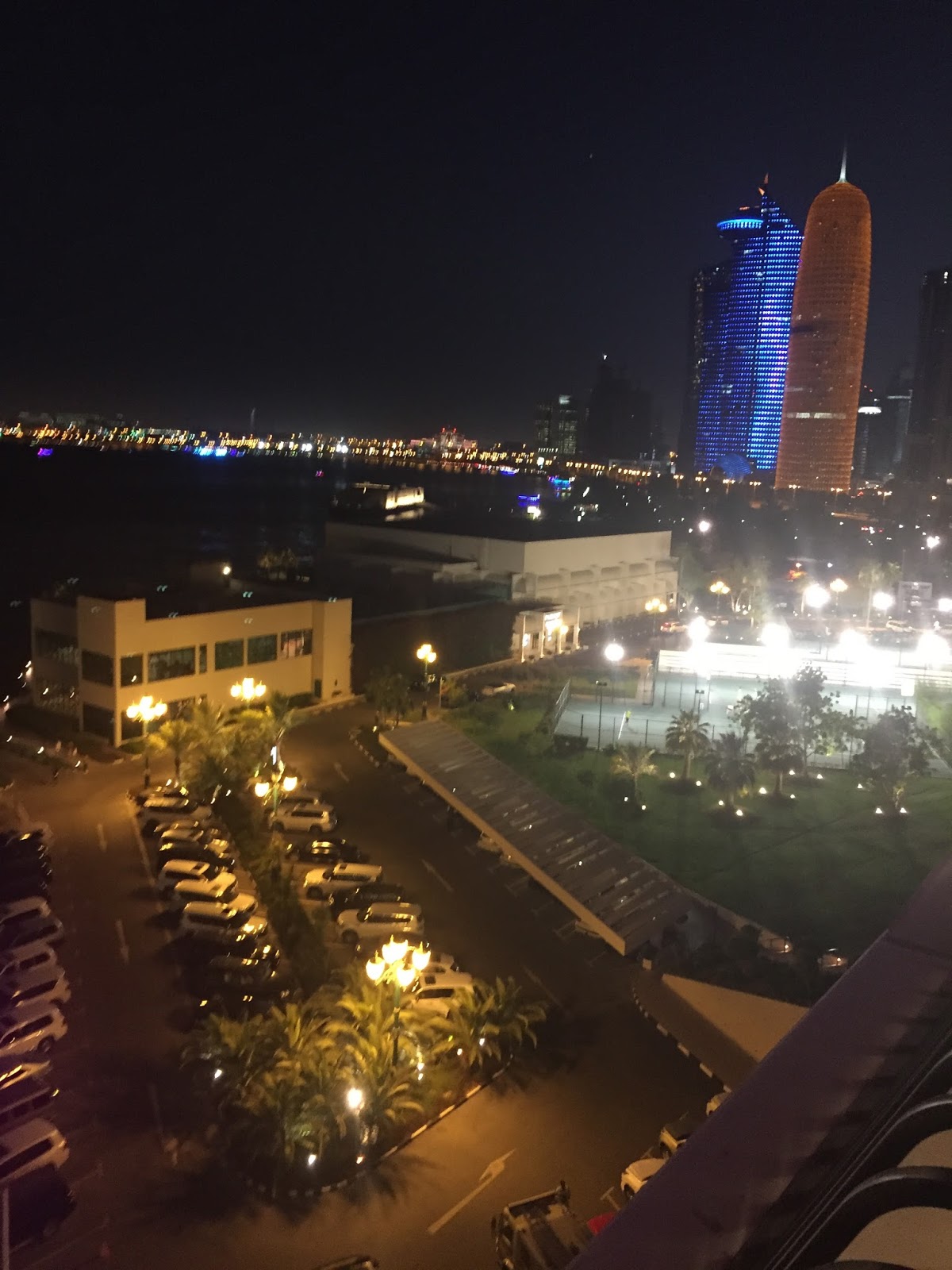
Sheraton Hotel, Doha that hosted the Forum and participants offered excellent services , which contributed to the success of the deliberations. 

Pak-German Renewable Energy Forum

Germany and Pakistan take their cooperation in renewable energy to a new level: High Profile German Delegation inaugurates the Pakistan German Renewable Energy Forum (PGREF)

Al-Bab Report


LAHORE – 26th May, 2016: A high profiled German delegation led by the Head of Division Afghanistan/Pakistan of the Federal Ministry for Economic Cooperation and Development (BMZ), Dr. Stefan Oswald, visited the secretariat of the Pakistan German Renewable Energy Forum (PGREF) to meet with the Government of the Punjab, Department of Energy representatives. Dr. Oswald inaugurated the first secretariat of PGREF at the premises of the Department of Energy.

The PGREF is a cooperation initiative between the Governments of the Islamic Republic of Pakistan and the Federal Republic of Germany supported by Deutsche Gesellschaft für Internationale Zusammenarbeit (GIZ) on behalf of the German Federal Ministry for Economic Cooperation & Development (BMZ) to create a network between their respective industries, public sectors and innovation networks in the Renewable Energy (RE) and Energy Efficiency (EE) field.

Dr. Asad Rehman Gilani, Secretary Energy, Government of the Punjab in his initial statements welcomed the delegates and gave an introduction to the PGREF along with upcoming goals and activities. In addition, topics such as energy efficiency and renewable energy in Pakistan were discussed. The German Government has been supporting the energy sector in Pakistan through GIZ’s Renewable Energy and Energy Efficiency project (REEE) since 2005.


With the aim to reducing the power shortage in Pakistan and moving towards an optimal energy mix by incorporating more renewable energy sources, the PGREF intends to promote cooperation and knowledge transfer in the fields of renewable energy and energy efficiency in Pakistan.

U.S. Ambassador Blome’s Meeting with Deputy Prime Minister and Foreign Minister Ishaq Dar

U.S. Ambassador Blome’s Meeting with Deputy Prime Minister and Foreign Minister Ishaq Dar The below is attributable to U.S. Mission Spokes...