Sunday, December 18, 2016

FAO and Pak food security
FAO Pakistan conducts training of stakeholders on measurement of Sustainable Development Goal 2, indicators of prevalence of undernourishment and acute or moderate food insecurity
Al-Bab Report

In an effort to develop capacity among national statisticians and help them monitor the targets of achievement of Sustainable Development Goal (SDG) 2, FAO Pakistan conducted one-day training in Islamabad.
This training focused on the methodology to compute two of the indicators related to the overarching Goal 2 of ending hunger, achieving food security and improving nutrition and promoting sustainable agriculture.
The two indicators are:
- Prevalence of undernourishment; and
- Prevalence of moderate or severe food insecurity in the population, based on the Food Insecurity Experience Scale (FIES)
Accurate and sustainable computation of these two indicators is important because they have been included in the list of indicators of the global monitoring framework for the SDGs.
Mr. Carlo Cafiero, Senior Statistician, and Voices of the Hungry Project Manager conducted this training for around 20 participants representing various organizations from the government and development sector including Ministry of National Food Security and Research and Pakistan Bureau of Statistics.
Mr. Carlo Cafiero on the occasion said:
“The global monitoring framework for SDGs is a product of the UN Statistical Commission, which is composed of the Chief Statisticians of all UN member countries. To develop the indicator framework, the UNSC appointed an Interagency and Expert Group composed of 28 member countries in the representation of all regions of the world. Membership is on a rotational basis: China, India, and the Philippines currently represent Asia in this Group. They have endorsed this indicator, which means that all countries in the region should be able to compute them, the reason why FAO is supporting capacity development initiatives like this one”.
Mr. Francisco Gamarro, Deputy FAO Representative was also present on the occasion and said:
“FAO’s work links hunger, undernutrition, and poverty with agriculture and natural resources,. The closeness of FAO’s own objectives to the SDGs has helped raise awareness of our role and there is greater recognition of the breadth of our work. ”
The participants observed that the training was useful for them to build sufficient analytical capacity to compute the two indicators correctly, though further support will be needed throughout the process.
FAO Pakistan is helping the Government of Pakistan to integrate the SDGs into their development processes and plans. It is also helping in building capacity to monitor achievements of the set targets. In addition, FAO Pakistan is also lending support to partnership-building around the SDGs, and helping to raise awareness of the SDGs among the general public and stakeholders.
Background
On 1 January 2016, the 17 Sustainable Development Goals (SDGs) of the 2030 Agenda for Sustainable Development — adopted by world leaders in September 2015 at a historic UN Summit — officially came into force. Over the next fifteen years, with these new Goals that universally apply to all, countries will mobilize efforts to end all forms of poverty, fight inequalities and tackle climate change.
The SDGs build on the success of the Millennium Development Goals (MDGs) and aim to go further to end all forms of poverty. The new Goals are unique in that they call for action by all countries, poor, rich and middle-income to promote prosperity while protecting the planet. They recognize that ending poverty must go hand-in-hand with strategies that build economic growth and addresses a range of social needs including education, health, social protection, and job opportunities, while tackling climate change and environmental protection.
Pakistan was quick to embrace the SDGs and in early 2016 a parliamentary SDGs Secretariat was established.
Saturday, December 17, 2016
Buoyant Assemblage
Buoyant Assemblage
Dr. Jassim Taqui

An exhibition of paintings titled “Buoyant Assemblage” opened here on Saturday at Gallery 6. The exhibition is a group show of paintings by seven leading artists Abrar Ahmed, Athar Jamal, AS Rind, Ghulam Mustafa, Masood A. Khan, Shammi Ahmad and WahabJaffar. True to its title, the exhibition exudes cheerfulness and vibrancy, as on entering the hall one gets drowned in the unveiled beauty and veiled energy of colors unleashed by these prominent artists.
Abrar Ahmed has presented five paintings, 3 in different and 2 in his usual style of painting women with elements of romance and beauty. The images have faces of women that are highly stylized with elongated necks, expressive eyes and eloquent hands. Birds, the moon, musical instruments, jewelry are additional adorning features.
Use of vibrant colors in eloquent composition add to the aesthetics of his paintings.
Athar Jamal is an artist in the classic tradition. He is an exponent of spontaneous, on-spot painting and for years he has made a practice of moving around the country, sketching and painting people. landscapes and scenes from life.
He is renowned for the Thar series, in which he has documented the costumes, homes and customs of the Thar region that maintains the traditions of an ancient culture. His figure studies are dramatic renderings of shades and three paintings of Thari women are fascinating in this show.
AS Rindis also well-known for his distinctive style figurative work reflecting the faces and moods of the women, adorned elegantly with ethnic jewelry. His work carries a strong cultural influence of Rahim Yar Khan, his homeland.
In this exhibition, he has presented his iconic work with a different thick texture and also a non-decorative figurative abstraction, which is full of energy created by vibrant colors and bold strokes. This new vocabulary of expression is impressive and will draw the attention of the collectors.
Ghulam Mustafa belongs to the group of ‘plein-air’ painter and can paint anywhere without being disturbed by the hustle bustle of the surroundings.
He masters in capturing with immense details the magnificence of the sunlight and the shadows and shades created by it. Four paintings in the exhibitions that his eyes brilliantly seize the kaleidoscopic effects created by the sunlight whether he is walking in the interior of the walled city of Lahore, passing in lanes, admiring the blossoming trees or enjoying clear skies. He paints with details, making the viewer move into the focused spot – an ability which is the hallmark of a highly skilled and mature painter.
Masood A. Khan’s paintings have been unique in their comprehension and style of their execution. Whether it is a village scene, urban city areas or still life, he has been successful in accurately visualizing and capturing the lights and shades through all materialistic barriers, as if he has x-ray eyes. With transparent washes of acrylic paints and minimal lines of ink and charcoal, he creates brilliant multi-dimensional, serene paintings.With 3 works in his usual style, we see a stunning artwork done by him in grout – a totally different medium, which is a mixture of water, cement, sand, gravel, and colors. The appearance of artwork is like that of painted 3-dimensional rock, but it maintains the effect of transparency through different objects, so akin to the work of the artist.
Shammi Ahmad’s mentor has been the legendary painter Jamil Naqsh with whom she continues to seek guidance. Her four paintings in the exhibition are from her recent series of work of female portraits titled “Beauty is Eternal”. According to Marjorie Hussain, famous art critic, and writer, “these paintings muses on the links that bind the past to present times, imagining that people who lived centuries ago remain within us. Working with smooth strokes, she brushes color intensified by the approach to the medium and in the process nurturing an uncanny luminosity that creates an enigmatic aura of fantasy”.
WahabJaffar’sbold and adventurous style have a strong identity and his paintings exude a refreshing energy as he continues to simplify the female form or paint still life while exploring the richness of a full palette. His smooth lines, color coordination and balanced compositions render the image in a sharp and effective manner.His work maintains a strong identity yet remains inspired by his mentor Ahmed Parvez. F N Souza, the famous Indian artist once said ”There’s a very mysterious element in Wahab’s colors; you must look for it under veil after veil of vivid hues, Carnival, Revelry, Merrymaking. It’s Christmas in Wahab’s art! It’s joy! It’s a feast of light and color!”
This show will continue daily from 11 am to 7 pm till December 24 at Gallery 6


MESSAGE ON INTERNATIONAL MIGRANTS DAY
MESSAGE ON INTERNATIONAL MIGRANTS DAY
18 December 2016
Al-Bab Report


This has been another turbulent year for refugees and migrants. We have seen the continued devastating effect of armed conflict on civilian populations, leading to death, destruction, and displacement. We have witnessed the unacceptable loss of thousands of lives of people in transit in the Mediterranean and elsewhere. And, to add insult to injury, we have witnessed the rise of populist movements that seek to alienate and expel migrants and refugees, and to blame them for various ills of society.
Yet, within this turbulence, we also find rays of hope, with concerned citizens and communities opening their arms and hearts. We have also seen a promising international response, culminating with the New York Declaration adopted in September at the United Nations Summit for Refugees and Migrants. It is now crucial that governments honor and build on their commitments to govern large movements of refugees and migrants in a way that is compassionate, people-centred, gender-responsive and rooted in fundamental human rights.
Every migrant is a human being with human rights. Protecting and upholding the human rights and fundamental freedoms of all migrants, regardless of their status, is a foundational element of the New York Declaration. To accomplish this, we need stronger international cooperation among countries of origin, transit and destination that is guided by international law and standards. We must reject intolerance, discrimination, and policies driven by xenophobic rhetoric and the scapegoating of migrants. Those who abuse and seek to harm migrants must be held to account.
A sustainable response to migration needs to address the drivers of forced and precarious movements of people. These include poverty, food insecurity, armed conflict, natural disasters, climate change and environmental degradation, poor governance, persistent inequalities and violations of economic, social, civil, political or cultural rights. Good governance of migration also demands to expand legal channels for safe migration, including for family reunification, for labor mobility at all skill levels, and educational opportunities for children and adults, as well as decriminalizing irregular migration and regularizing the status of undocumented migrants.
The 2030 Agenda for Sustainable Development offers an opportunity to ensure that the needs of the most marginalized, including migrants, are made a priority so that no one is left behind. On this International Migrants Day, I call on the international community to act on the global compact on safe, regular and orderly migration as an important contribution to building a world of peace, prosperity, dignity and opportunity for all.
Denmark Embassy promotes cultural exchange
Denmark celebrates art and culture of
Pakistan
Al-Bab Report


“Art and Culture is a universal way of expressing our traditions, values, ideologies, and emotions. It does not matter who we are or where we come from. Art speaks a universal language, and most importantly it reminds us that we are all human beings with the same kind of hopes, dreams, and fears in life”
– Ambassador of Denmark, H.E. Ole Thanks
Islamabad, 16 December 2016: The Government of Denmark in collaboration with the Danish Centre for Culture and Development (CKU) held a large-scale public event to celebrate the diversity of culture in Pakistan while highlighting art and culture as a tool for socio-economic change.
The event which marked the official closing of the cultural cooperation between Denmark and Pakistan was held at the Pakistan National Council of Arts (PNCA) and highlighted the Danish experience with the power of art, culture and creative industries through its development cooperation in Pakistan.
Speaking at the closing ceremony, Ambassador of Denmark, H.E. Ole Thonke underlined how art and culture enlighten, enrich and create a feeling of a common identity and understanding and help create a more humane world by connecting people from across different countries and cultures. He stressed the importance of working together to build a free and fair world, where everyone enjoyed equal rights.Concluding his speech, Ambassador Thonke said that the Danish support to the cultural sector aimed to help Pakistan reclaim and revive public space and use its culture as a tool for promoting tolerance and peace. He also saw it as an important way to revive the creative industries and create economic opportunities for the people of Pakistan. Although the program is now closing, the seeds had been sown and he hoped to see the local partners continue their great work in Pakistan.
The event included an exhibition of the work carried out by the local partners AHAN, Ajoka, The Little Art, BNU/LBF, Hashoo Foundation, Shirkatgah, Punjab University, Khawendo Kore, CWSA, CYAAD, Alhamra Arts Council, Olomopolo/KSS, UNESCO, and Freemuse.
These 14 organizations and their local partners are working with art and culture in a social context with the aim to reduce poverty, support peace and stabilization as well as strengthening democratization, human rights, and gender equality. This is done by empowering people through active participation in art and culture, enhanced economic growth through support to creative industries, and promoting intercultural dialogue and intercultural collaboration.
Mr. Ole Ramsing, CKU-Programme Manager Pakistan shared his views saying that Pakistan has a long and proud cultural tradition, but the privilege to partake in cultural activities is unevenly distributed. He also highlighted that due to the fear of terrorism and extremism, the distress of assembling in public space has increased significantly, which is why it has become even more important to reclaim this space to ensure Pakistan can continue to thrive on the richness of its culture that promotes tolerance and peace.
The exhibition was followed by musical performances by local musicians of Ajoka, CYAAD, Shirkatgah and Hashoo Foundation and also a live performance of Danish musicians “Live Strings” who played pieces from the classical repertoire, including Tango Jalousie, as well as their own compositions. The music groups closed the musical evening by all playing together for an enthusiastic audience in the jam-packed PNCA Auditorium, transcending national, political and ethnic boundaries.
The event closed with a full performance of Ajoka’s play “Bala King”, a witty and relevant political satire. The event was visited by a large number of people from all walks of life.
Thursday, December 15, 2016
Kazakhstan- the soul mate of Pakistan
Kazakhstan- the soul mate of Pakistan
Dr. Jassim Taqui

It was a festive mood in the National Day Reception organized by the Kazakh Ambassador, Dean of the Diplomatic Corps Bakhitbek Shabarbayev.
Indeed, it was one of the warmest reception I attended this year. The Dean was shining due to his shining personality, humility, and kindness. It was his day and he alone stole the show.
The reception was held in the well decorated Marquee Hall, Hotel Marriot, Islamabad to celebrate the 25th anniversary of the Independence of the Republic of Kazakhstan.
The event was well attended by a large number of ambassadors, senior diplomats, officials and prominent Pakistanis. The guest of honor, Chaudhry Abid Ali was early in attendance. He extended his congratulations to the host and joined the ambassador in cutting the ceremonial cake which was preceded by the national anthems of Kazakhstan and Pakistan.
The Guests enjoyed an exquisite menu of International cuisine and drinks complemented by flawless service by the staff. It was one of the best show of Marriot in Islamabad.
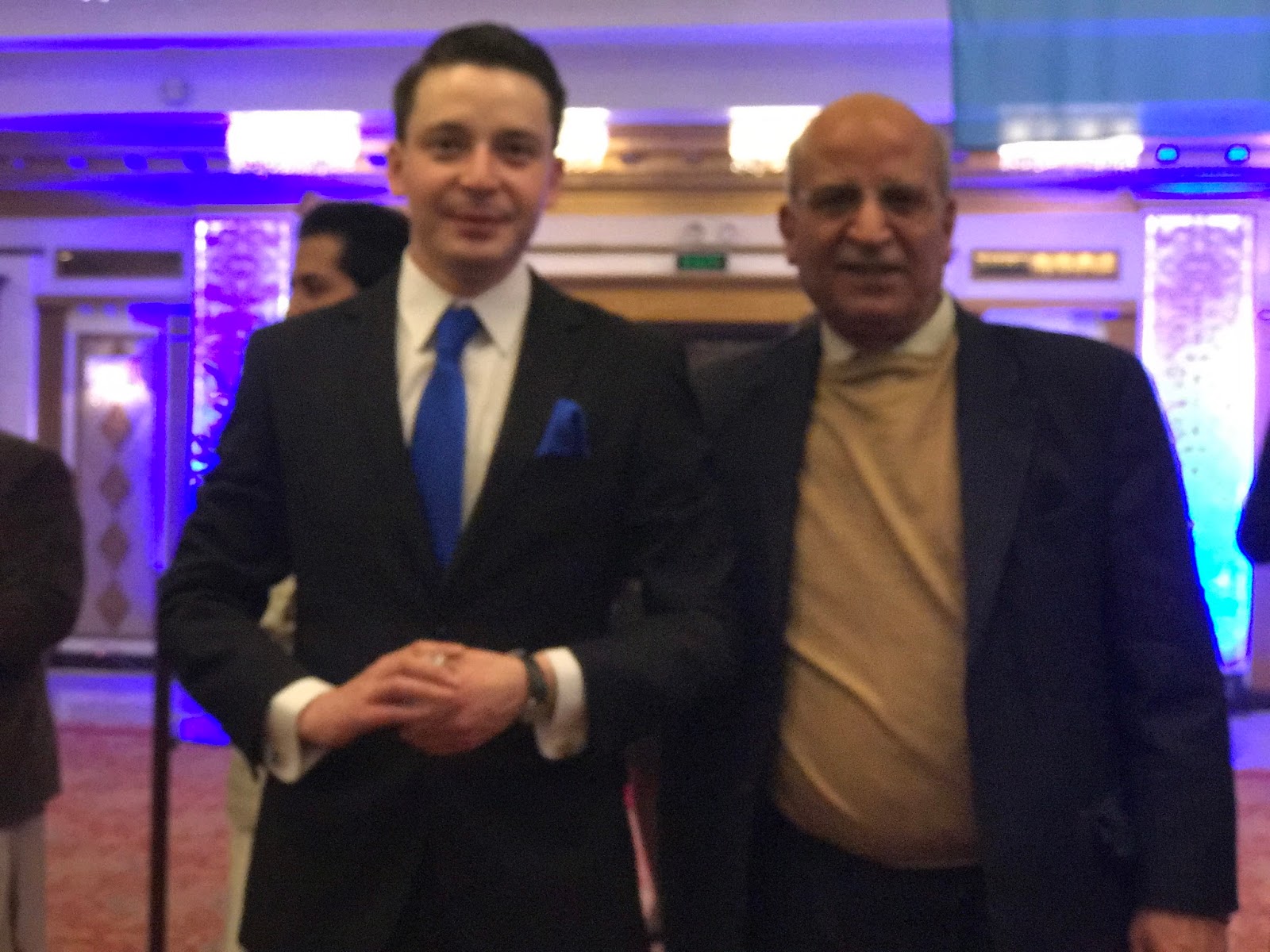
Al-Bab camera was present in the event. Glimpses of the function:




Subscribe to:
Posts (Atom)
-
 Islamabad, Pakistan—On the occasion of Pakistan Day, March 23, 2024, the President of the Islamic Republic of Pakistan bestowed the prestig...
 -
 Assad: the survivor Dr. Jassim Taqui DG Al-Bab Institute for Strategic studies There are so many titles for the Syrian President Bas...